Gamers believe that the RTX 5090 shouldn't be listed in system requirements – the graphics card is impossible to buy


Hardware requirements in recent games have long become a source of panic, though this panic is usually rooted in a simple misunderstanding. The line "requires RTX 5090" in system requirements gets read as a death sentence, as if the game simply won't run without a flagship card costing an absurd amount of money.
In reality, this almost always refers to maximum settings at native 4K and 60 frames per second, historically the most demanding scenario and never a mandatory one.
The latest round of debate was sparked by early system requirements for the upcoming The Blood of Dawnwalker, an RPG from Rebel Wolves built on Unreal Engine 5.
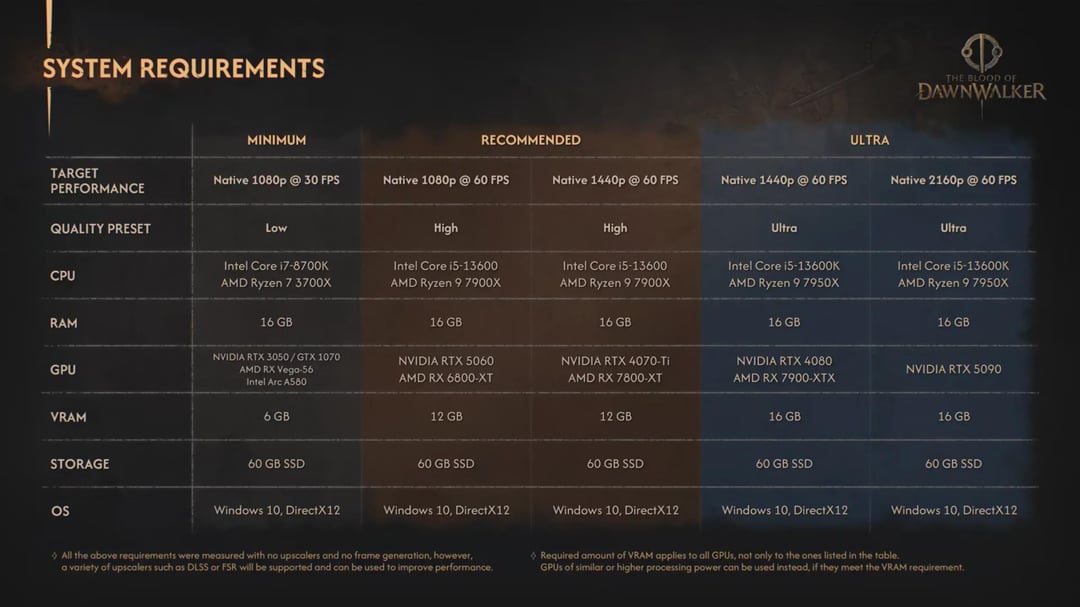
The table did list the RTX 5090 for max settings, but the same table named an old GTX 1070 as the minimum card, and the RTX 5060 as recommended for 1080p60 on high settings. The developers later revised the requirements downward, but the damage was already done.
The table drew criticism on other fronts too. The recommended specs called for 12GB of video memory, while the RTX 5060 listed in that same row only carries 8GB.
The biggest questions came not from the top-end tier but from the middle and bottom of the table, where native 1080p60 called for a powerful Ryzen 9 class processor. The gap between the minimum Zen 2 and the recommended top-tier Zen 4 looks unreasonable, and the explanation turns out to be pretty mundane.
The studio's office most likely runs powerful chips that the game was tested on, and the recommendation was probably picked based on thread count, mechanically matching the Intel Core i5-13600 to the closest AMD chip with the same number of cores. A real six-core chip from the 7000 series would likely handle the title just as well.
Lurking behind all this is the usual suspect in most of these stories, Unreal Engine 5 with its Nanite and Lumen. Epic Games markets these technologies as a magic "flip the switch and get gorgeous visuals" button, without mentioning how demanding they are by default.
The lack of clear optimization documentation and the shortage of senior developers with a decade of UE5-specific experience means studios ship standard-looking visuals at outrageous hardware costs. One commenter summed up the diagnosis pretty concisely:
If the game has insane requirements and looks mid, chances are it's running on UE5.
Worth remembering that "can it run Crysis?" was once not a meme but a genuine question. Crytek deliberately built settings into the game that no graphics card could handle at launch, banking on future hardware generations, and that was considered normal at the time.
The idea of building in headroom for max settings is sound on its own, the same settings that choke an RTX 5090 today at 4K will run smoothly on some future RTX 7070 Ti a couple of generations down the line. The real problem right now is different, hardware progress has slowed down while prices have shot up, leaving no guarantee that an affordable upgrade is even on the table.