Bethesda turned the White House into a radioactive crater in Fallout 3 simply because there were no quests planned there

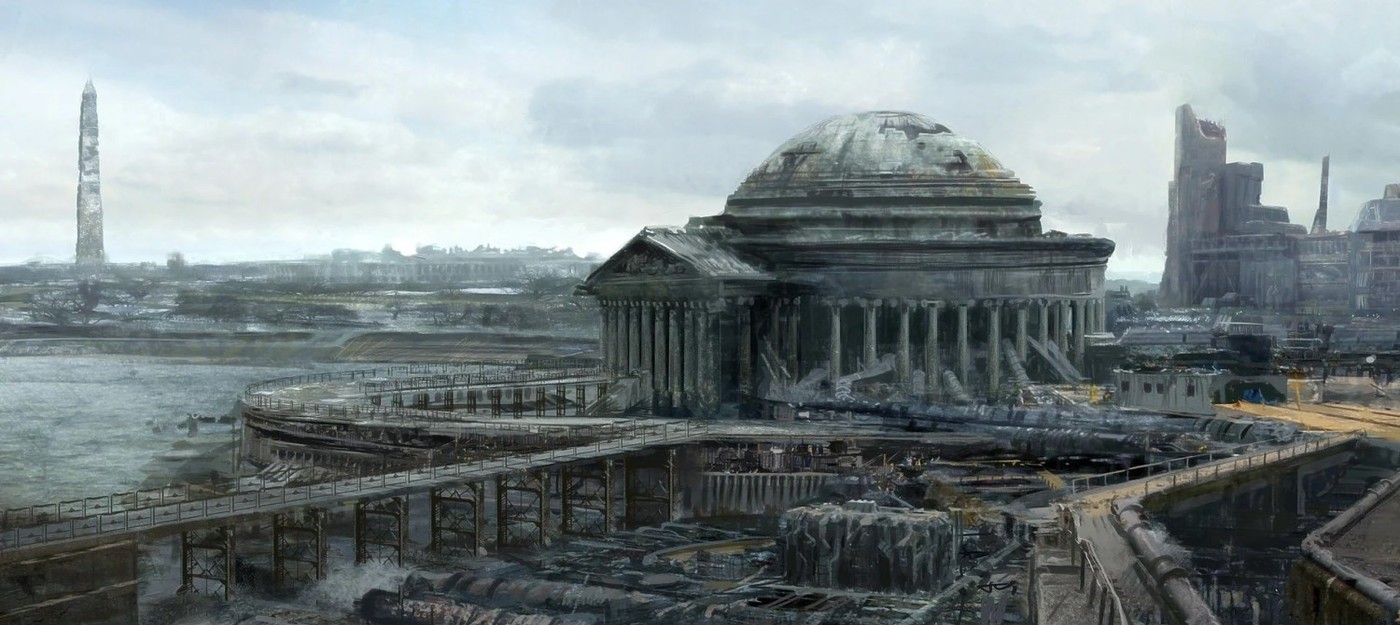
The White House ended up as a radioactive crater in Fallout 3 for a remarkably pragmatic reason – Bethesda's team simply had no quests planned for that location. Lead artist Istvan Pely explained that the studio relied on modular asset kits to construct most of Washington DC, but iconic structures like the Jefferson Memorial or the Capitol required unique, hand-crafted work that took artists considerable time. The unspoken rule was simple: if level designers didn't request specific assets for a location, it didn't get built.
Since no gameplay was ever planned around the White House, the developers faced a real dilemma – they couldn't exactly ignore one of the most recognizable landmarks in the American capital. The solution was elegant in its simplicity:
"Put a crater there. People will buy it."
Pely compared the decision to the famous scene from Raiders of the Lost Ark where Indiana Jones, faced with an intimidating swordsman, simply pulls out a gun and shoots him – style points be damned.
Studio head Todd Howard had always stressed the importance of a grounded reality that lets players "reach and touch the world." In his view, players come to a game like *Fallout 3* eager to see familiar landmarks reimagined through a post-apocalyptic lens – and that sense of anticipation is exactly what makes the setting work. A fully fictional city simply wouldn't carry the same weight as the ruins of somewhere people already know.
Interestingly, Pely himself had always read the White House crater as deliberate world-building rather than a clever workaround. When your premise is a nuclear war that wiped out most of civilization, it stands to reason that 1600 Pennsylvania Avenue didn't make it. What began as a technical limitation ended up feeling like a natural, almost inevitable part of the post-nuclear world Bethesda was building.