Star Wars Galactic Racer features heat management system to prevent explosions

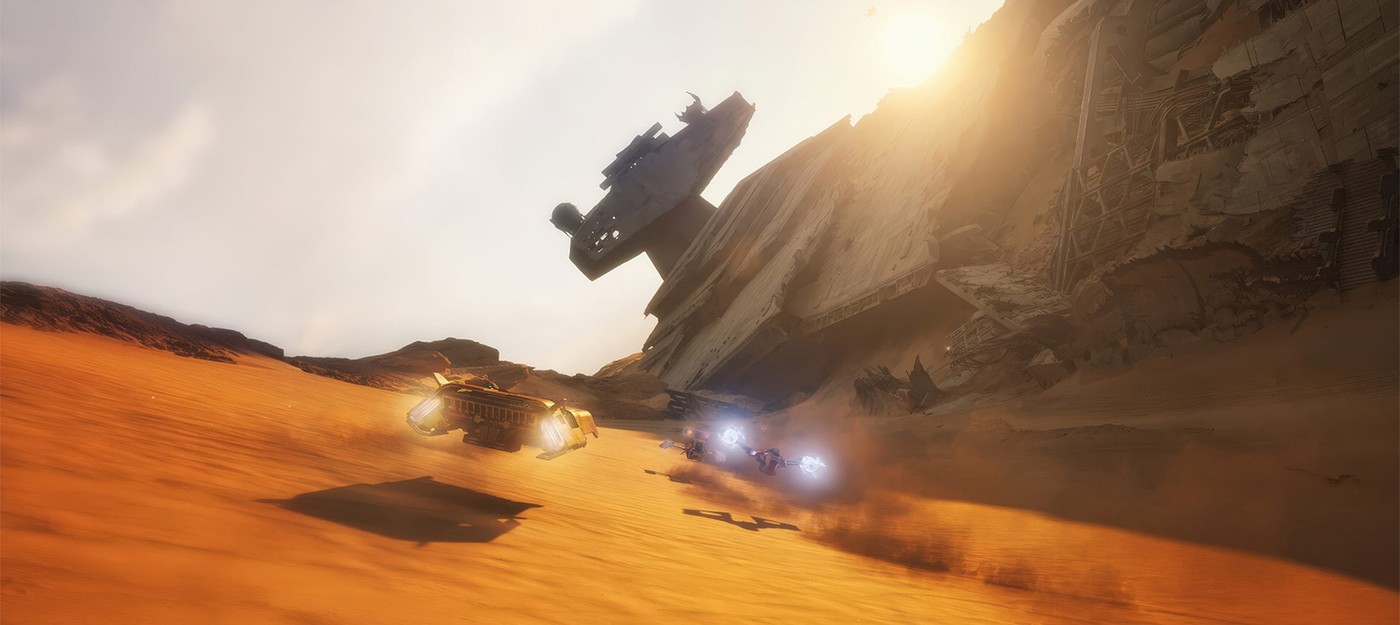
Star Wars Galactic Racer launches later this year, marking a return to high-speed intergalactic racing not seen since Star Wars: Racer Revenge in 2002 – a full 24 years ago!
While Fuse Games' take isn't solely focused on pod-racing, the studio aims to capture the sense of speed viewers experienced watching the iconic Boonta Eve Classic scene from The Phantom Menace in 1999.
In an IGN interview, the developers explained that the time is finally right for a racing game with the speed and visuals of that Episode 1 sequence. Returning to track-based racing, the team has elevated the graphics to match George Lucas' film – and in some places, exceed it.
Fuse Games founder and CEO Matt Webster stated:
I can't answer the question of how come no one else has thought about it. Maybe it's a question of timing. But once we had that, it was like, 'okay, how can we do something different with racing and Star Wars?'
Creative director Kieran Crimmins added:
I see it more like the time was right now rather than the time was wrong before… Whenever you make a video game, it's a mixture of so many elements. It's a little bit hard to get the lightning in the bottle, but when we did this brief and we got this together, we were like, 'this is the perfect time to make this thing.' And I believe we're the perfect studio to make it.
Just like in The Phantom Menace's pod-racing scene, Star Wars Galactic Racer requires players to do more than just navigate corners. These high-speed vehicles generate massive amounts of heat that must be managed alongside a two-phase boost system.
Boost has been in and around racing games forever. Press the button, go fast, consume the boost, and you've got a sort of a tactical decision-making going on there. But we wanted to do something more. So we have a two-phase boost system. The second phase is something called a ramjet, which just goes really, really, really fast, but it's got a consequence too – it generates a load of heat, and if run it for too long, you're going to explode.
Different planets force you to use vehicles differently. Environmental heat helps warm the ramjet to operating temperature, but obviously makes it overheat faster. On Lantaana – a lush tropical planet with an active volcano – there are rivers of lava and water, hot and cold. Running over cold water cools the ramjet, allowing longer use.
The logic is simple – on icy Hoth you can boost longer, while on desert planet Jakku you'll have less time.
Star Wars Galactic Racer launches on PC, PS5, and Xbox.