Humanoid robot Unitree G1 demonstrates superhuman recovery speed and completes 130,000 steps in -47°C freeze

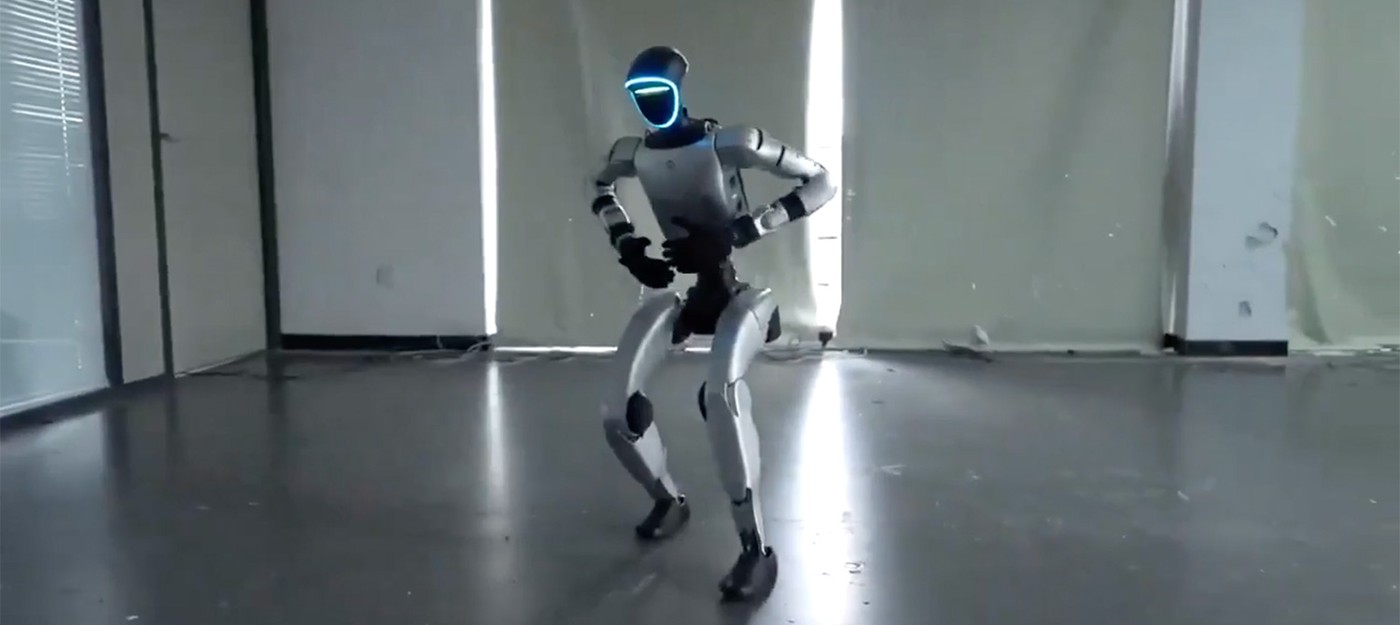
Chinese company Unitree Robotics once again demonstrated the capabilities of its humanoid robot G1 in a series of stress tests, where the machine was repeatedly kicked, pushed, and knocked down. Each time, the robot incredibly quickly got up and restored balance thanks to a system called Anti-Gravity mode.
Such tests are standard practice in robotics for checking stability and reliability of balance systems. During the demonstration, G1 received kicks, double pushes, and even running kicks, flying back several meters. However, the robot didn't just fall and reboot – it actively calculated landing trajectory, the method of quick recovery, and readiness for the next impact.
For spatial orientation, G1 uses a 3D lidar, depth cameras, and an inertial measurement unit on the body. All these sensors constantly update the internal model of the environment and the robot's physical state, helping it quickly react to external forces. The joints are equipped with low-inertia high-speed permanent magnet synchronous motors paired with a dual encoder system, providing precise feedback.
One of the most impressive moments of the demonstration is when G1 receives a side kick. Instead of falling, it spreads its legs wide and uses inertia to restore balance. The movement looks natural, smooth, and controlled.
G1 is a compact humanoid standing about 127 centimeters tall and weighing approximately 35 kilograms. The mechanical structure includes 23 to 43 joint motors depending on configuration. The base price of the robot is around $13,500, making it one of the most affordable humanoids with such capabilities on the market.
Despite its affordability, it's not entirely clear what mass-market activities this robot could be used for. Perhaps package and food delivery? By the way, G1 recently completed over 130,000 steps at a temperature of -47.4°C in Xinjiang, becoming the first humanoid to make an autonomous walk in such extreme conditions. While this is an impressive achievement, it still doesn't suggest practical use possibilities.