Korean probe Danuri took the first images of the Falcon 9 stage impact site on the Moon

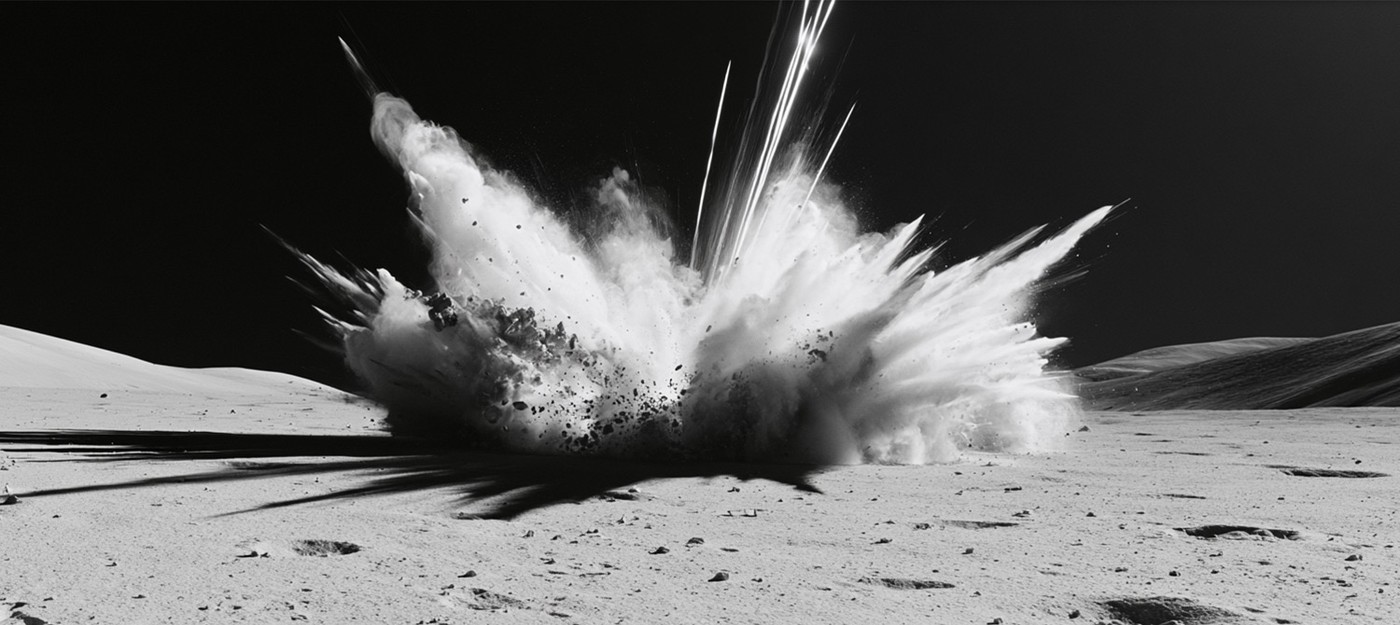
Earlier this week, it emerged that the upper stage of a SpaceX Falcon 9 rocket had crashed into the surface of the moon. The collision wasn't considered massive, but the four-ton stage reportedly slammed into the lunar surface at a speed of around 5,400mph.
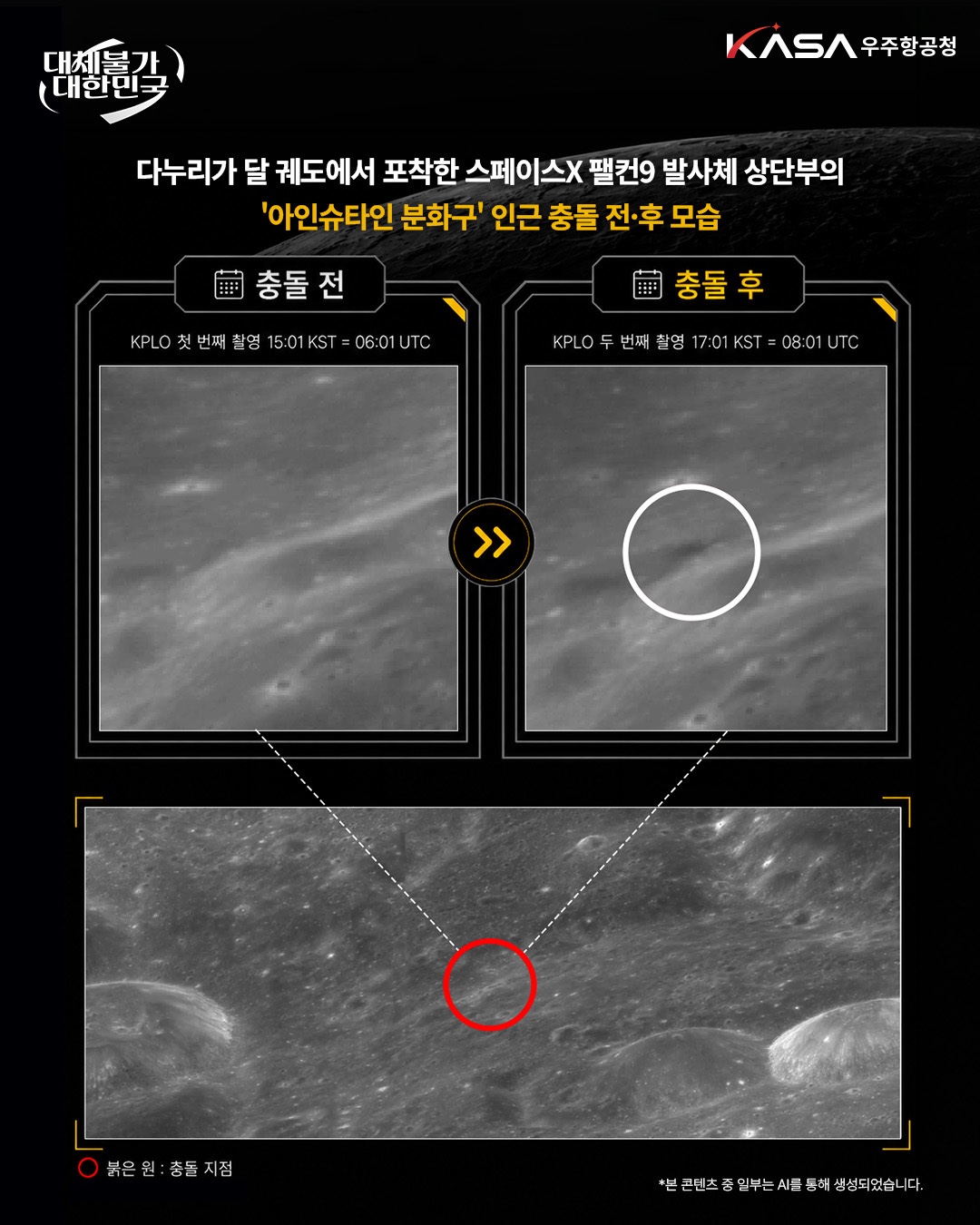
Now the Korea AeroSpace Administration (KASA) has shared what it calls the first before and after images of the site. The lunar orbiter Danuri managed to capture what a lot of the world's astronomers will have missed.
The second image clearly shows the crater left by the Falcon 9 upper stage after it hit in the early hours of August 5. NASA estimated the crater at around 60 feet wide and 12 feet deep.
The agency noted that meteoroids hitting the moon is a daily occurrence, while collisions with human-made objects are far more rare.
The Falcon 9 has been in orbit since January 2025, and carried two lunar landers to orbit on the Blue Ghost mission. The reusable booster, the first stage, successfully returned to earth last year, but the rocket remained in space to ensure the landers reached their intended destination.
SpaceX commented on the incident in a post on X after the crash had taken place:
For most of our missions, we plan a controlled deorbit of the Falcon second stage so it safely reenters over the ocean. For higher energy missions like those to a lunar transfer orbit, nearly all performance on the vehicle is devoted to successfully placing the payload in the intended orbit, and a controlled disposal maneuver is not always possible.
The impact poses no danger to Earth, but increasing quantities of space debris are of concern to some astronomers. Astronomer Matt Bothwell of the University of Cambridge told the BBC:
It could feasibly be within a few decades that it's actually quite hard to get past Earth's orbit because space is so crowded.
NASA said that disturbances to the moon give scientists valuable insight, as they allow researchers to study how ejecta plumes behave. That, in turn, reveals more about the geology of the moon and can inform future space missions.
- SpaceXAI agreed to dismantle 69 illegal gas turbines from one of its data centers, but it will take a whole year to do so
- New service lets AI agents hire humans for real-world tasks
- Anthropic promises not to add ads to Claude unlike ChatGPT