PC enthusiast sent liquid cooling directly onto the die of an RTX 2060 and lowered the temperature from 70°C to 28°C

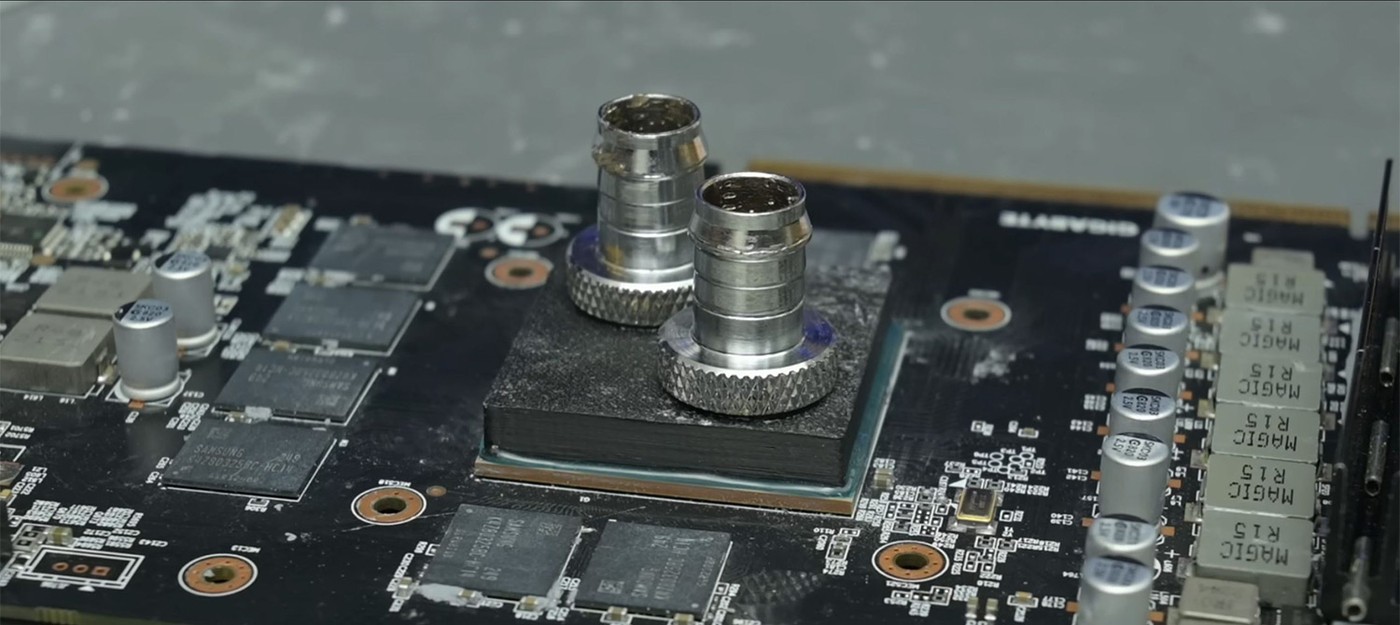
An enthusiast going by the name TrashBench ran a radical GPU cooling experiment, ditching traditional heatsinks for direct water contact with the graphics chip silicon.
The result turned out impressive, with temperatures dropping from 70°C to just 28°C.
The modder already has a reputation for bold experiments, including mounting a full CPU cooler directly onto a graphics chip. This direct water cooling method, though, pushed things even further and has nothing in common with standard closed-loop systems.
Pouring water straight onto the silicon is risky since it can leak onto the substrate and other parts of the board, so the first tests were done on a dead RTX 3060. A 3D-printed plastic block handled isolation, with epoxy applied around the silicon.
Early attempts leaked even through the plastic plate, but the modder eventually refined the setup. After the RTX 3060 passed its leak test, he repeated the same process on a GeForce GTX 980.
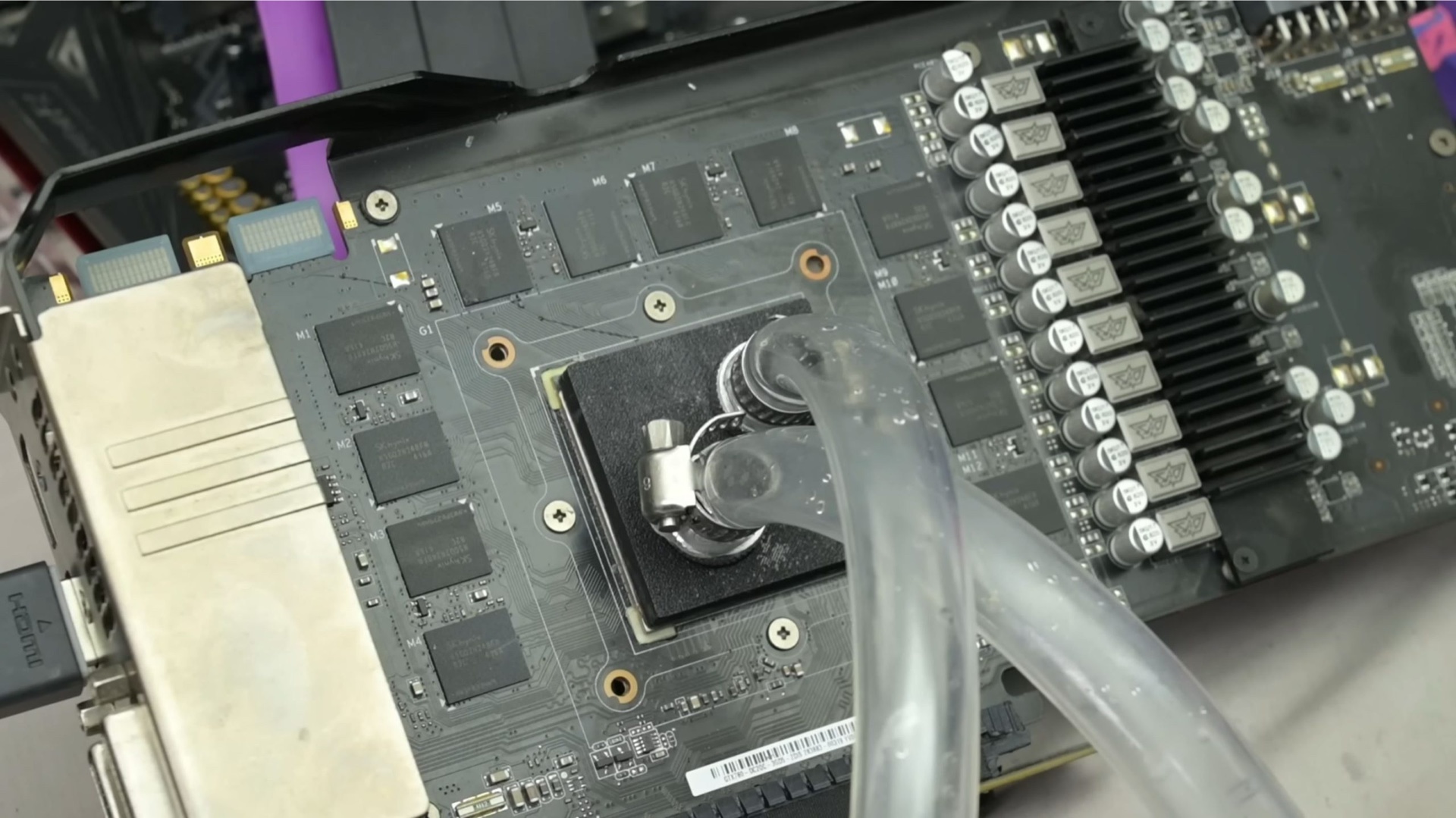
Next came the newer GeForce RTX 2060. Running the stock heatsink in Unigine Heaven, the card hit 70°C.
The modder built a custom plastic block for the GPU, secured the tubing, and ran a pump drawing water straight from a container. The liquid hit the silicon directly, cutting the temperature from 70°C down to 28°C, with the hotspot reading 41°C.
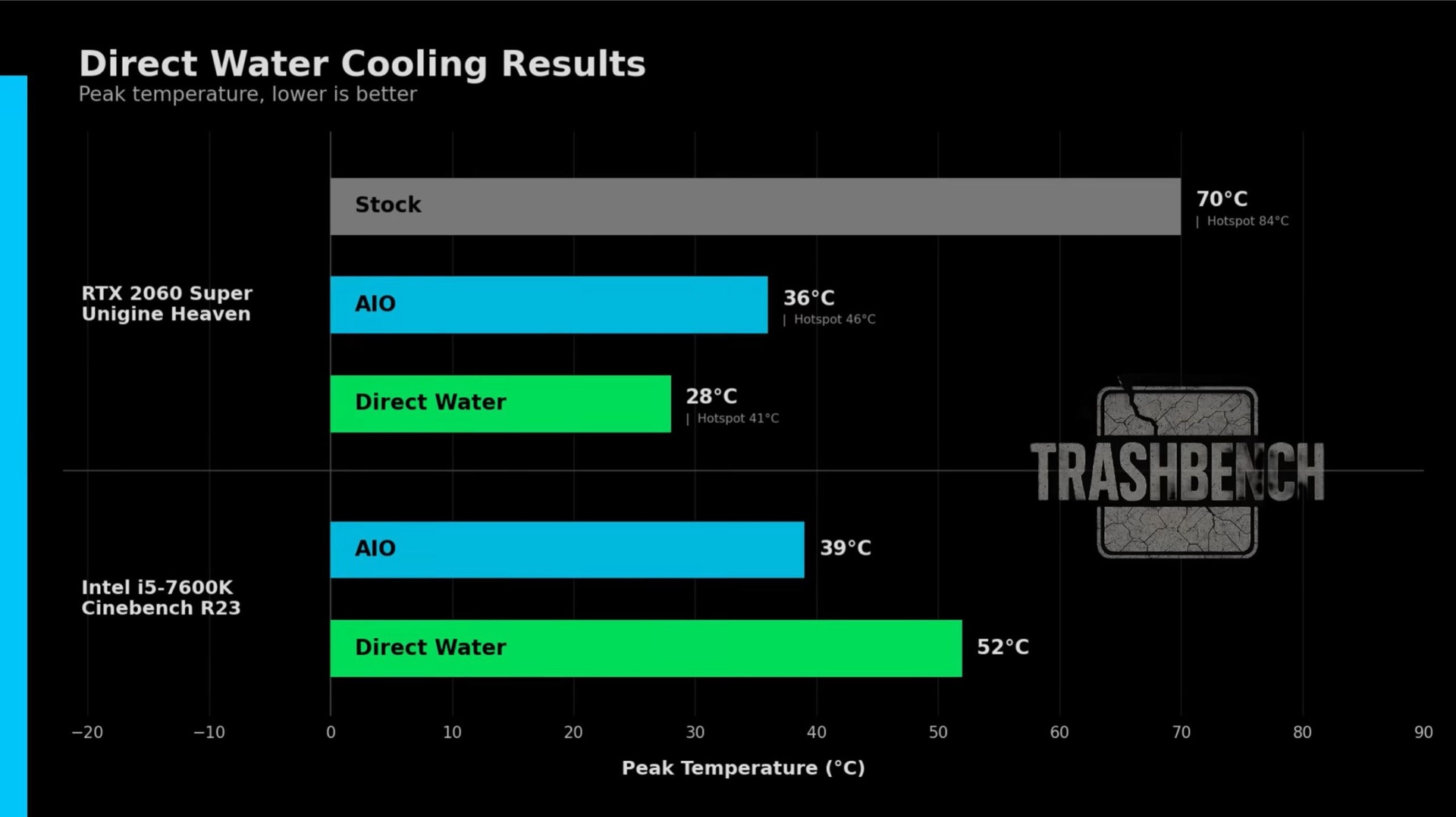
Before moving to direct cooling, the enthusiast also hooked up a 360mm AIO to the GPU, which kept the chip at a solid 36°C. The experiment later moved to an Intel Core i5 7600K, but there the results fell short of a regular AIO setup.
Despite the tempting numbers, this method is far from suitable for general use. It demands serious expertise and can easily leave a graphics card permanently damaged.