YouTuber builds ancient city in Cities Skylines and plans to evolve it through millennia to modern day

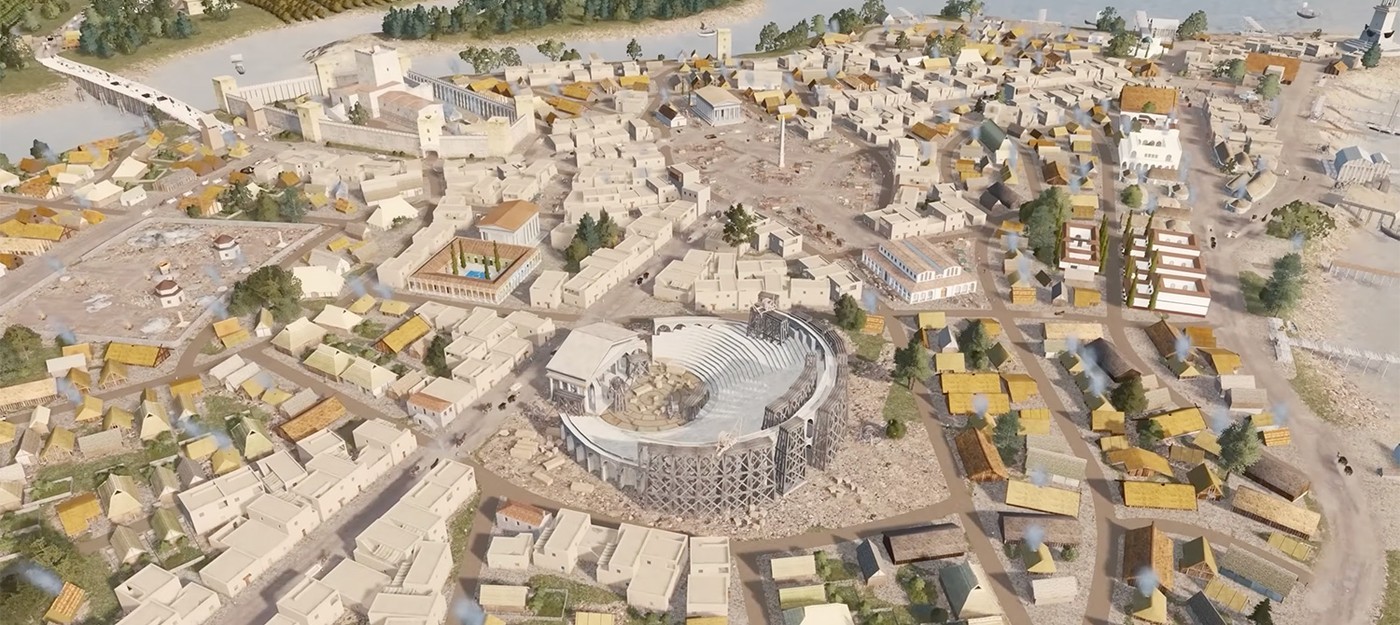
Content creator Cityburg launched an ambitious historical simulation project in Cities: Skylines, constructing a settlement that begins in the classical era of ancient civilizations and will develop through centuries into the modern age. The first episode of the series, published approximately a month ago, showcases the birth of a community on a naturally protected river island – an ideal location for the earliest homes of ancient settlers.
Cityburg approached the project with historical precision. The city begins with wooden docks and fishing piers, a central marketplace for trade, and a well providing drinking water. The first gravel roads emerge organically where residents create pathways between homes. The creator meticulously recreated the process of constructing a wooden bridge across the river using period-appropriate technology – sturdy logs driven deep into the riverbed, where timber doesn't rot but hardens like stone over time.
To create an authentic atmosphere, Cityburg assembled an extensive collection of mods and assets. Some elements required replacement – the initial fire cistern didn't function correctly, so the creator installed a water reservoir that better suited the early settlement.
As the community grows, it acquires a Greek-style temple dedicated to the goddess of reeds and marshes, a market square opposite the sanctuary, and wooden fortifications with towers and gates. The builder intentionally places narrow streets in chaotic arrangements, imitating the natural growth patterns of early urban settlements. A forum appears – a large open space for gatherings and commerce that becomes the center from which city roads radiate.
Cityburg addresses social structure through architecture – with the emergence of nobility comes private quarters within fortress walls, while wealthy citizens erect spacious homes along the riverbank. The city gains a hospital, school, necropolis, and cargo dock for active trade. The river crossing receives the name Pont Vito, honoring a talented engineer from the community who helped develop the project.
The creator emphasizes historical accuracy, noting that in ancient times, cities didn't appear instantly. Greeks built stone houses around pathways, Sumerians created dwellings from clay brick, and Etruscans used wooden frames to shape streets. Different cultures employed different tools, but the core idea remained identical – protect people, store provisions, and create a safe place for life.
In the second episode, the settlement continues expanding and growing more complex. The community transforms into a significant trading hub on the ancient world map, attracting merchants from distant regions. Residents speak multiple languages – Simlish, Latin, Gallic, and Ancient Greek. An urban planner of the era proposed organized layouts with a central forum, giving the city its first clear structure for the first time.
Development of this settlement remains ongoing, but the map can be downloaded from Steam Workshop with all necessary mods and assets included.